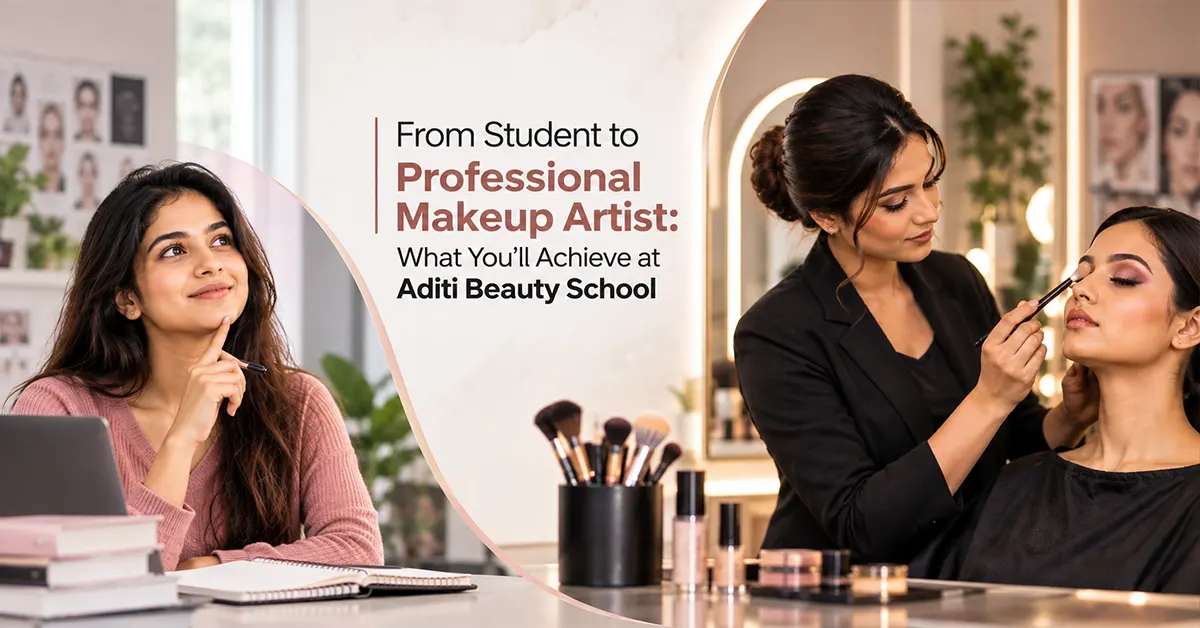
From Student to Professional Makeup Artist: What You’ll Achieve at Aditi Beauty School
Every professional makeup artist started as a beginner with a kit, a mirror, and a lot of curiosity. The difference between staying a hobbyist and becoming a booked, paid professional almost always comes down to one thing: structured training. Here‘s what that journey typically looks like and what you can expect to walk away with after a course at Aditi Beauty School.
Quick Answer
A structured makeup course takes you from foundational skills (skin prep, base matching, basic eye/lip work) through advanced techniques (HD, airbrush, bridal, draping) to a final stage of live, hands-on practice on real models leaving you with a working portfolio and job– or freelance-ready skills.
Stage 1: Building the Fundamentals
Every strong makeup artist starts with the basics done right:
- Skin analysis and prep (not skipping this is what separates amateur from professional work)
- Foundation and concealer matching across undertones
- Basic eye shapes, brow shaping, and lip application
- Understanding tools brushes, sponges, and their correct uses
This stage isn’t glamorous, but it’s the foundation everything else is built on.
Stage 2: Specialized Techniques
Once fundamentals are solid, training moves into specialization:
- HD Makeup camera-ready finishes for photography and videography
- Airbrush Makeup spray-applied, long-wearing techniques
- Bridal Makeup longevity-focused looks built for multi–hour wedding functions
- Contouring & Highlighting adapted to face shape and lighting conditions
- Draping & Hairstyling Basics rounding out a full bridal service offering
Stage 3: Live Practicals
This is where training becomes real. Practicing on live models not just mannequins teaches you to:
- Adapt technique on the spot to different skin types and tones
- Work within real time constraints (weddings don’t pause for perfection)
- Handle client communication and expectation-setting
Students who skip this stage (common in short online-only courses) often struggle the most when they start working with actual paying clients.
Stage 4: Building a Portfolio
A portfolio is what gets you booked not a certificate alone. During training, students build a body of work across different looks (bridal, party, HD, airbrush) that becomes the foundation of their professional presence on Instagram, WhatsApp Business, and word-of-mouth referrals.
Stage 5: Choosing a Career Path
With training and a portfolio in place, graduates typically move into one of these directions:
| Path | Descriptions |
|---|---|
| Freelance Artrist | Book Bridal and party clients independently, especially during wedding season. |
| Salon/Studio Employment | Join an established salon as an in-house makeup Artist |
| Own Studio | Launch a personal brand or studio in Nagpur |
| Fashion & Media | Move into editorial, photoshoot, or media-focused makeup work |
There‘s no single “right” path many artists start freelancing part-time while employed elsewhere, then transition fully once their client base grows.
What Makes Training at Aditi Beauty School Different
Since 2013, Aditi Beauty School has trained makeup artists under the direct guidance of Aditi Harde, who brings over 10 years of real, hands-on industry experience not just teaching theory, but applying the same techniques in the school‘s own client-facing bridal and makeup services. This means students train under someone actively working in the field, not removed from it.
Frequently Asked Questions
1. How long does it take to become a professional makeup artist?
This depends on the course level and practice time, but structured courses typically move students from fundamentals through advanced bridal and HD techniques with hands-on practicals, preparing them for freelance or salon work.
2. Do I need a portfolio to start getting clients?
Yes. A portfolio even a small one built during training is usually what convinces new clients to book you, more than a certificate alone.
3. Can I freelance while working another job?
Yes, many makeup artists start by freelancing part-time, especially during wedding season, before transitioning to full-time work.
4. What's the biggest gap in self-taught vs formally trained artists?
Self-taught artists often lack live-practical experience working under time pressure on real, varied clients which structured courses specifically build through supervised practicals.
5. How do I enroll in a course at Aditi Beauty School?
Call +91 9699658530 or fill out the enquiry form at aditibeautyschool.in to learn about current batches and course options.
